Forklift vs crane: what this guide covers
Forklift vs crane: discover situations where a forklift can’t safely move heavy machinery, the risks to avoid, and when a crane is essential. Read our guide now. If you are planning a machinery move and want to keep people safe, protect your equipment, and stay on schedule, this guide will help you decide when a forklift is enough and when a crane is the better choice. American Erecting & Ironworks brings decades of experience to projects across Southeast Wisconsin and parts of Northern Illinois, and we are sharing the key factors we use to make that call.
Every plant, jobsite, and street setup is different, so there is no single rule that fits all. Yet the forklift vs crane decision often comes down to load weight and shape, center of gravity, travel distance, obstacles, and the surface under your wheels or outriggers. Read on to learn the red flags that tell you a forklift is not the right tool and the scenarios where a crane makes the move safer, faster, and more precise.
Forklift vs crane fundamentals
How forklifts are built to lift
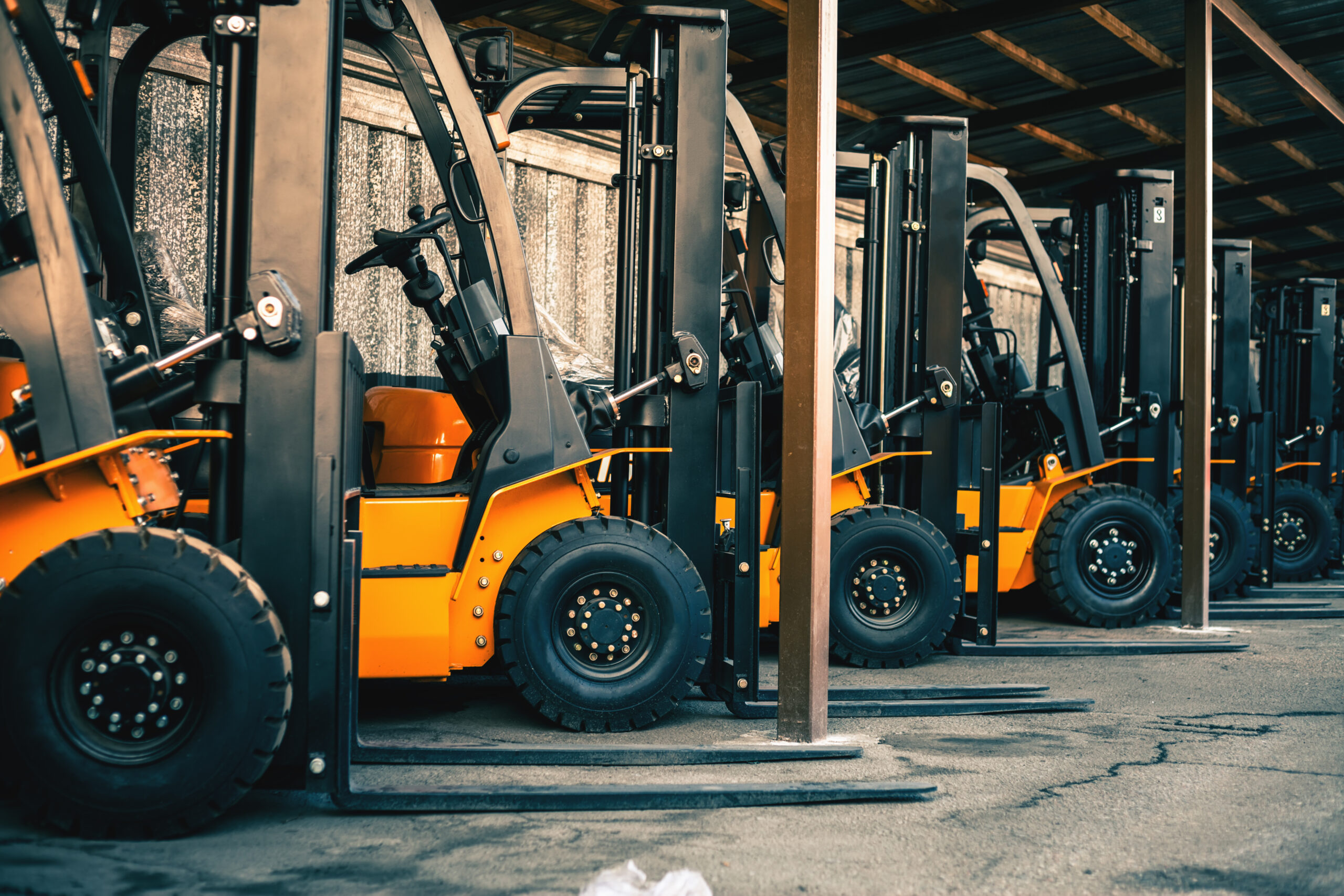
Forklifts lift from below with forks or attachments and carry loads over short distances. Their stability depends on a triangle formed by the front wheels and the center pivot point. The heavier and farther out the load sits, the more the forklift wants to tip forward. That is why every forklift has a rated capacity based on a specific load center. If a machine is longer, taller, or the weight sits farther away from the mast, actual capacity drops fast. Forklifts are at their best on smooth, strong floors with clear paths and low, compact loads that sit securely on the forks.
How cranes are built to lift
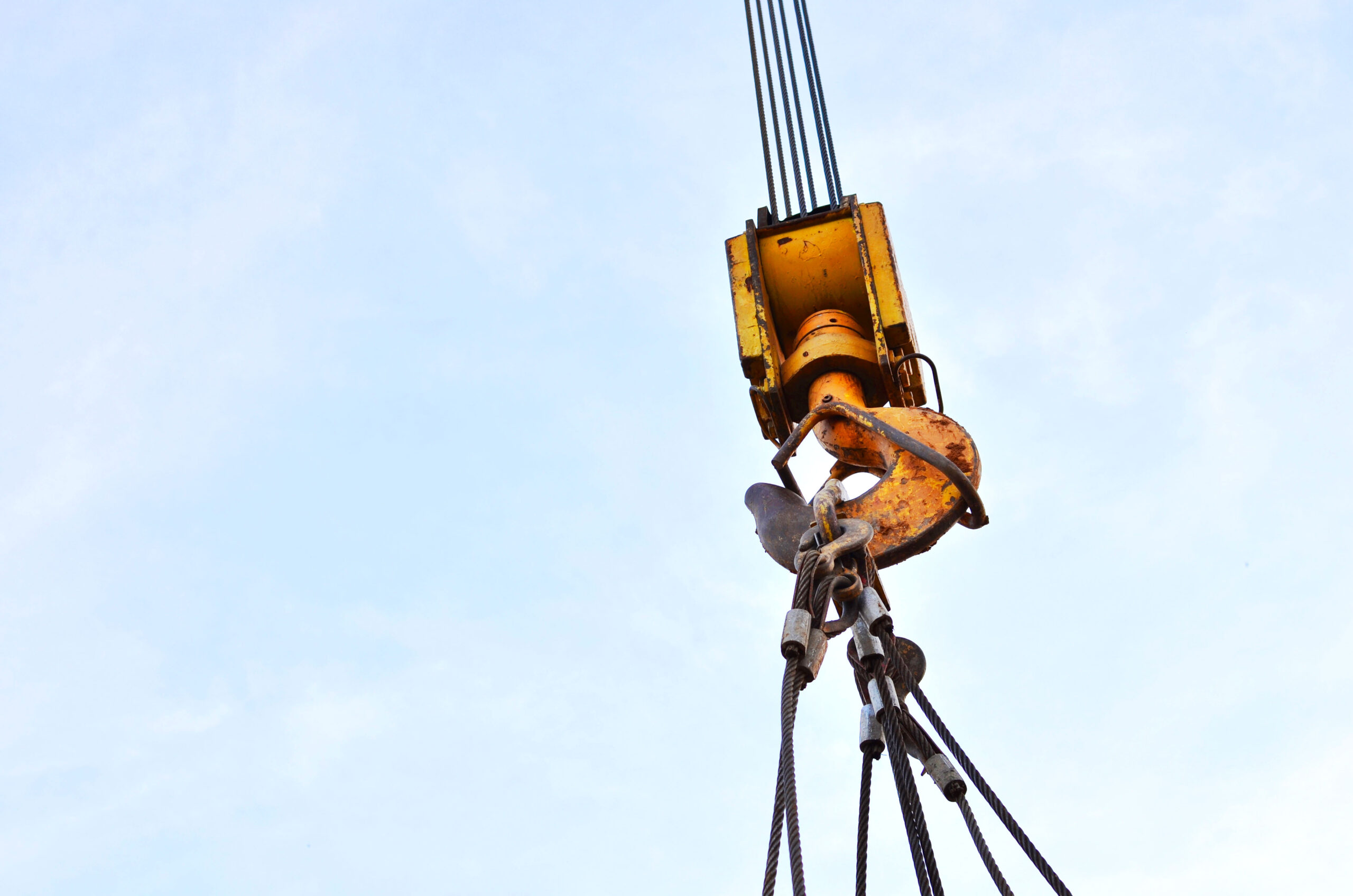
Cranes lift from above with a hook and rigging. They do not carry the load on forks or put point loads on a floor the way forklifts do. Modern cranes rely on load charts, radius, and boom angles to stay within safe limits. Outriggers spread the load over larger areas, which reduces ground pressure. Cranes can place heavy equipment over obstacles, into tight spots, onto rooftops, and across pits without rolling the load through the building. NCCCO-certified crane operators, like those at American Erecting & Ironworks, follow strict procedures to plan each pick and keep safety margins where they should be.
Red flags that make a forklift unsafe for machinery moves
Understanding limits is the heart of the forklift vs crane decision. If you spot any of these red flags, a crane may be the safer option.
- The load exceeds the forklift’s rated capacity at the true load center
- The machine is tall, long, or top heavy and raises the center of gravity too high
- The center of gravity is off to one side, causing the load to tilt and twist
- There are no fork pockets or safe contact points for the forks or attachments
- The equipment has delicate panels, piping, or sensors exposed to fork damage
- Ramps or slopes are present that could shift the load suddenly
- Door frames, columns, or tight turns block a smooth travel path
- The floor is not rated for the point loads under the forklift wheels
- Gratings, mezzanines, pits, or trenches could collapse under wheel loads
- There are low ceilings or overhead lines that could contact the mast or load
- There is dust, flammable vapor, or poor ventilation for internal combustion forklifts
- There is ice, water, gravel, or debris that reduce traction and control
Any one of these issues can turn an easy move into a risky one. Several together are a clear sign to choose a crane or a different method.
Site conditions that favor a crane
When the environment works against a forklift, a crane often shines. These are conditions where cranes show clear advantages.
- Rooftop placements where forklifts cannot travel or climb
- Overhead obstructions that make rolling a tall load impossible
- Confined interiors where only a vertical pick and swing can reach the spot
- Uneven or soft ground where forklift wheels sink or bounce
- Pits, docks, and mezzanines that require lifting across open spaces
- Busy production floors where minimal disruption is needed
- Outdoor moves with curbs, landscaping, or grade changes
- Street picks that need reach over power lines and parked vehicles
- Wind-sensitive loads where controlled hoisting beats traveling with forks
Because cranes lift from above and can reach over obstacles, they limit floor traffic and remove many of the hazards that come with pushing a large, awkward machine around a plant.
Real-world examples where a forklift should not handle the move
These examples show how the forklift vs crane decision plays out in the field.
- HVAC units to rooftops: Cranes place packaged units on curbs in minutes, while forklifts cannot reach rooftops safely. American Erecting & Ironworks performs these picks daily for contractors across Racine, Kenosha, and Milwaukee.
- Injection molding machines: Tall frames and high centers of gravity make forklifts unstable, especially when exiting trailers. A crane can land the machine right at its pads without rolling the load through tight aisles.
- Press brakes and stamping presses: Long, heavy beds and offset centers demand controlled picks. A crane with the right rigging spreads the load and avoids fork contact that can bend or scar precision surfaces.
- CNC mills across pits or gratings: Forklift wheels can overload fragile flooring. A crane can bridge the gap and lower the mill with millimeter precision.
- Generators and switchgear onto pads: Outdoor terrain, curbs, and conduit stubs can snag a forklift. A crane can float the gear over obstacles and set it exactly on the anchors.
- Cooling towers and chillers: These units are bulky and sensitive to twisting. A multi-point crane rig distributes the load and protects the equipment during placement.
How American Erecting & Ironworks evaluates forklift vs crane
American Erecting & Ironworks brings a proven process to every machinery move. With more than 30 years in the field and NCCCO-certified operators, we assess risks up front and recommend the right approach, whether that is a forklift, a crane, or a hybrid plan.
- Gather specs: weight, dimensions, and estimated center of gravity
- Walk the route: doorway widths, aisle turns, slopes, and overhead clearances
- Check surfaces: floor ratings, ground bearing capacity, and weather exposure
- Identify pick points: OEM lugs, fork pockets, and rigging attachment points
- Model the lift: radius, boom angles, and load chart margins for cranes
- Plan safety: barricades, spotters, taglines, and communication signals
- Schedule: coordinate shutdowns, weekend or holiday windows, and delivery times
- Permits: manage street closures, right-of-way permissions, and utility clearances when needed
This disciplined approach protects your equipment and your people and keeps your project on schedule. It is the core of how we handle every forklift vs crane decision in Racine, Kenosha, Milwaukee, and nearby Lake County, Illinois.
Crane advantages you may not expect
Many teams view cranes as a last resort. In practice, the right crane can shorten timelines and lower risk, often making the overall cost lower after you factor in downtime and damage avoidance.
- Precision placement with smooth hoist and boom controls
- Lower floor risk because the load does not roll through the building
- Fewer manual touches thanks to direct picks into final position
- Clear, documented limits using the crane’s load chart and rigging plan
- Faster rooftop and over-the-building moves than piecemeal forklift shuttles
- Better control of top-heavy or delicate machines using spreader bars and softeners
What goes wrong when you push a forklift too far
When a forklift is used outside its limits, the consequences come fast. Here are common failures we are called to fix or prevent.
- Tip-over incidents from undersized forklifts or long, top-heavy loads
- Bent forks, damaged masts, and broken chains from overloaded lifts
- Dropped machinery after a sudden shift on a ramp or threshold
- Crushed panels, bent shafts, and cracked housings from fork contact
- Floor damage from concentrated wheel loads on slabs or mezzanines
- Injury, claims, and lost production time due to unplanned incidents
The safer choice is to match the tool to the job. American Erecting & Ironworks can help you avoid these pitfalls with a professional plan and the right equipment.
Safer alternatives when a forklift is not enough
Even when a forklift alone is not safe, there are practical alternatives that keep your project moving.
- Mobile crane or boom truck for vertical picks and precise placements
- Forklift with a rigger boom for controlled low-height lifts in limited cases
- Portable gantry systems with toe jacks and skates for inch-by-inch moves
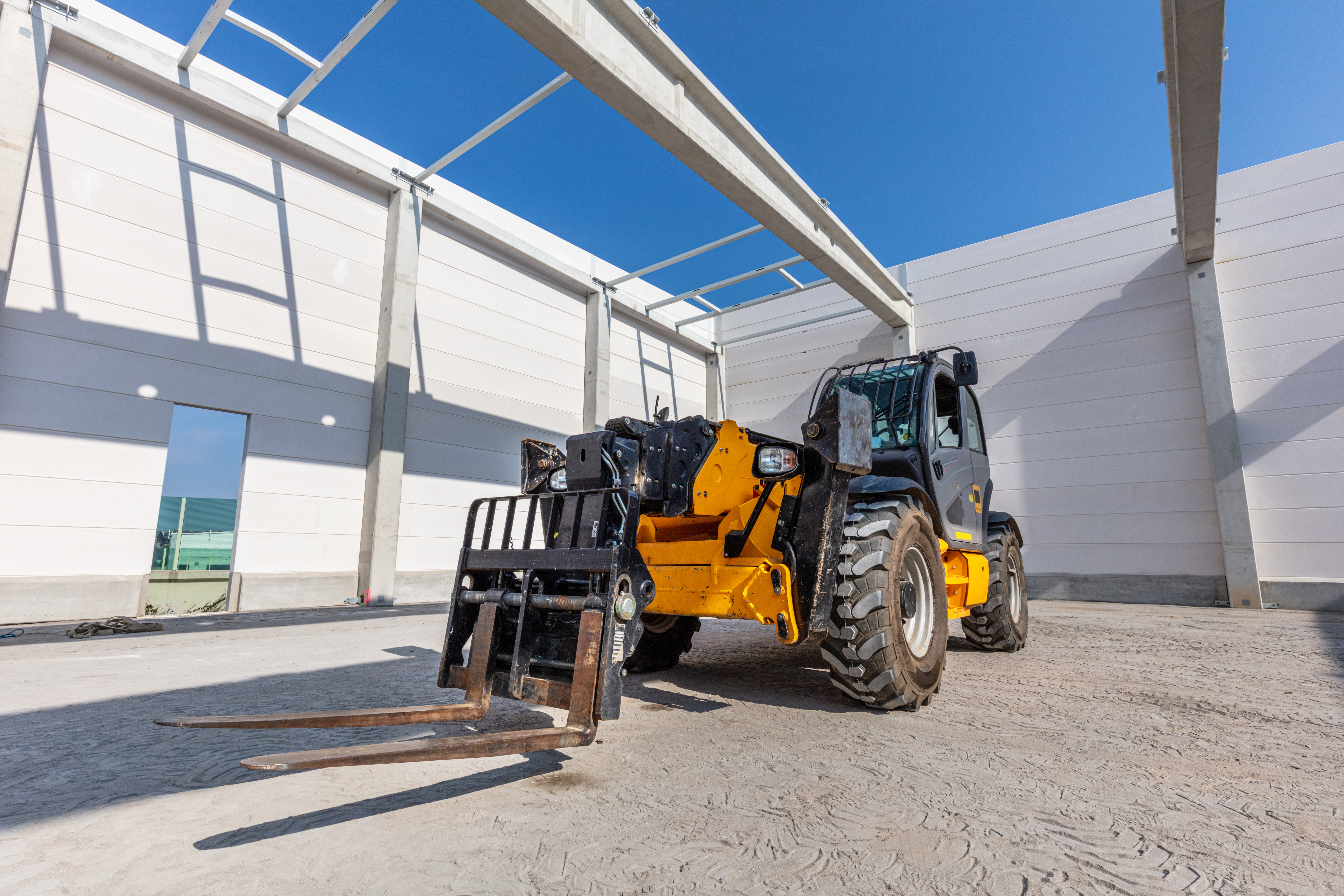
- Rough terrain telehandler outdoors where forks need reach and stability
- Dual-crane or crane-and-forklift tandem picks when a single point is not possible
American Erecting & Ironworks offers equipment rental and full-service crews. Our fleet includes forklifts with or without rigger booms, rough terrain telehandlers, and genie boom lifts. We also provide late-model cranes and tractor-trailers, so we can handle the entire move from loading to final set.
Planning checklist for your next machinery move
Use this quick checklist to prepare details your rigger or crane company will need.
- Confirm exact weight and center of gravity from the manufacturer or nameplate
- Measure doorways, ceiling height, and the tightest aisle on the route
- Document floor ratings, mezzanine capacity, and any grating or pits
- Identify utilities to disconnect and plan for lockout and tagout
- Locate and inspect rigging points and verify bolt patterns for anchors
- Map crane setup areas and truck access routes if a crane is likely
- Watch the forecast and plan around wind and weather windows
- List required permits and any street or lane closures
- Align schedules across vendors, including weekend or holiday windows if needed
- Set a communication plan with spotters, radios, and signals
Bring this list to American Erecting & Ironworks and we will build a safe, efficient plan tailored to your site and timeline.
About American Erecting & Ironworks
American Erecting & Ironworks is a second-generation, family-owned company based in Racine, Wisconsin. Incorporated on April 15, 1991, we have more than 30 years of experience serving contractors, builders, and manufacturers in Racine, Kenosha, and Milwaukee counties, plus parts of Lake County, Illinois. Our services include crane services, machinery moving, and steel erecting. We also offer equipment rental and steel sales to keep your project on track from start to finish.
Our fleet features late-model cranes, tractor-trailers, forklifts, telehandlers, and boom lifts. All crane operations are handled by NCCCO-certified operators who follow strict safety standards. Whether we are landing HVAC units on a rooftop or relocating a production line on a tight schedule, we focus on safety, reliability, and customer satisfaction.
We rent well-maintained forklifts, forklifts with rigger booms, rough terrain telehandlers, and genie boom lifts on daily, weekly, monthly, or extended terms. For structural jobs, we supply steel beams and columns in many sizes within Wisconsin. If you want a partner that can plan, lift, and place with care, American Erecting & Ironworks is ready to help.
Service area and contact details
We serve Racine, Kenosha, and Milwaukee counties, plus parts of Lake County, Illinois. Visit AEAIWI.COM for more information or to request a quote, or contact us directly using the details below.
- Address: 2108 Clark St, Racine, WI 53403
- Phone: (262) 637-7177
- Hours: Monday through Friday, 7:00 AM to 4:30 PM
Our team can work around your production needs, including weekend and holiday hours when required. Tell us your deadline and we will build a plan to meet it safely.
Forklift vs crane: quick answers to common questions
When is a forklift the best choice?
A forklift is best for short, indoor moves on strong, level floors with low, compact loads that have proper fork pockets. If the load is well within the rated capacity at the correct load center, and the route is clear with no tight turns or slopes, a forklift can be quick and efficient. American Erecting & Ironworks can also add a rigger boom when low-height lifting is needed without a full crane setup.
When is a crane essential?
A crane is essential when the load is near or over forklift limits, is tall or top heavy, must go onto a roof, needs to cross pits or fragile floors, or must pass over obstacles like lines and pipes. A crane is also the safer pick when precision placement is required, when the move must avoid floor traffic, or when wind and weather make rolling a tall load risky.
Can I rent equipment only, without a crew?
Yes. American Erecting & Ironworks offers equipment rental on flexible terms. Choose daily, weekly, monthly, or extended rentals for forklifts, forklifts with rigger booms, telehandlers, and genie boom lifts. If you need operators or riggers, we can provide full-service crews as well.
Do you provide rigging gear and planning?
Yes. We provide a complete rigging plan, including spreader bars, slings, shackles, softeners, and taglines. We assess pick points, verify load path, and set up barricades and signals. We also help with permits and traffic control when a street or lane closure is needed for a crane setup.
What qualifications should crane operators have?
Crane operators should be certified and trained on the specific equipment. At American Erecting & Ironworks, our crane operators are NCCCO-certified. Our teams follow documented procedures and use current load charts and rigging best practices to keep each pick within safe limits.
How quickly can you mobilize?
Because we operate a fleet of late-model cranes and support equipment, we can mobilize quickly. We coordinate with your production schedule and can work during shutdowns, overnight windows, weekends, and holidays when needed. Call (262) 637-7177 to discuss your timeline.
The bottom line on forklift vs crane
Picking between a forklift and a crane is not about preference. It is about physics, site conditions, and risk. If the load is heavy, tall, awkward, or needs to go over obstacles or onto a roof, a crane is usually the safer and faster choice. If the load is compact and the route is clear and strong, a forklift may be perfect. When in doubt, ask a pro.
American Erecting & Ironworks has helped customers make the right forklift vs crane choice for more than three decades. We combine practical field experience with careful planning and certified operators to keep your project safe and on schedule. For help with your next machinery move, visit AEAIWI.COM or call (262) 637-7177.